Marketing Funnel Stages Explained: From Awareness to Conversion
When someone visits your website for the first time, you cannot expect them to buy immediately. They may have found you through Google, seen one of your ads, or clicked a social media post, but that doesn’t mean they are ready to become a customer. This is where understanding the marketing funnel stages becomes important.
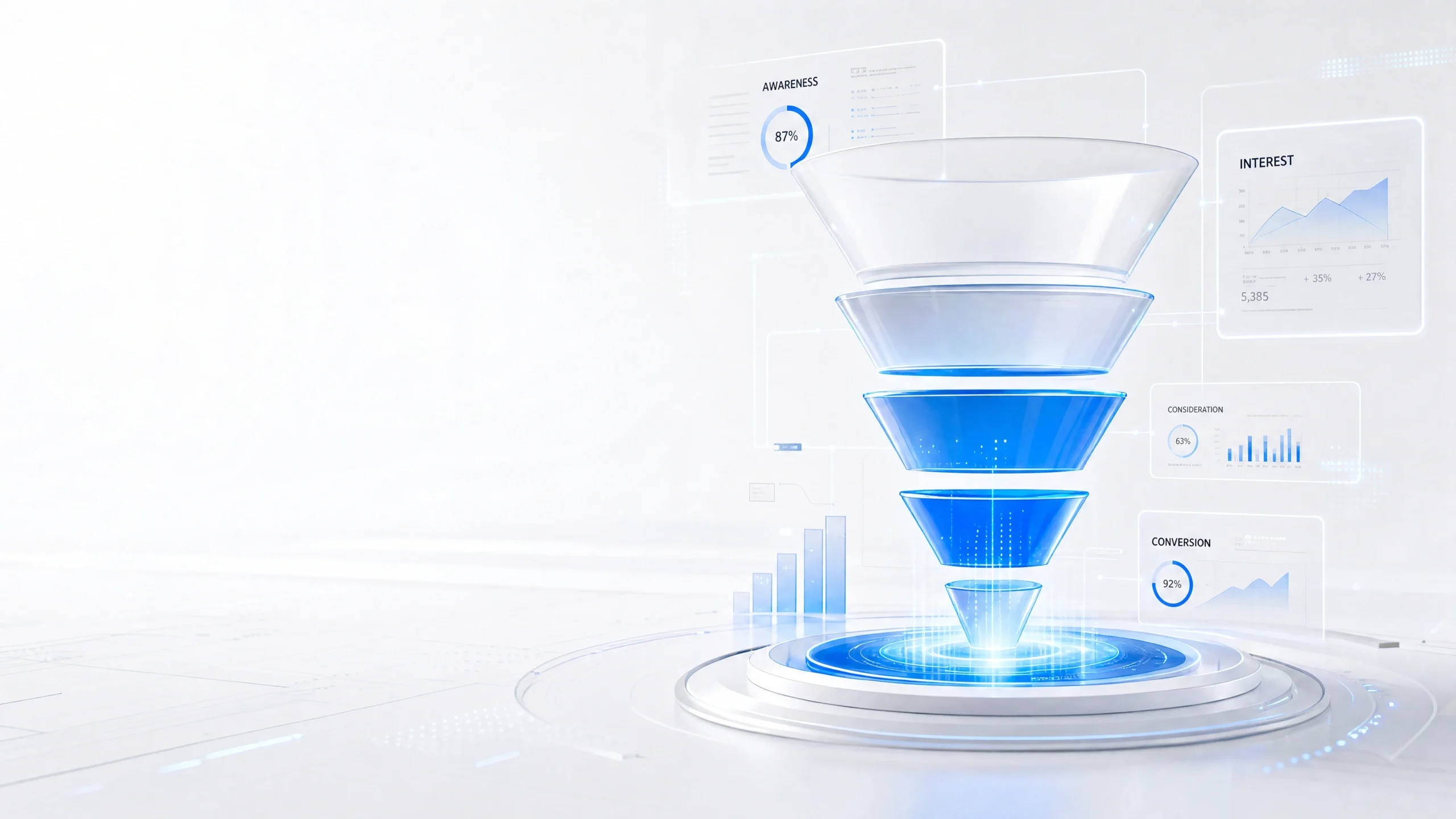
A marketing funnel helps you understand how a person moves from discovering your business to eventually taking action. The important part is recognising that people at different stages need different information. Trying to sell to someone still researching a problem is very different from speaking to someone already comparing service providers.
Awareness: The First Interaction With Your Brand
The awareness stage is where the customer journey begins. At this point, your potential customer may know they have a problem, but they may not know what the right solution looks like or which company can help them.
For example, imagine a business owner noticing that their website receives traffic but generates very few enquiries. They might search for terms such as “how to increase website conversions” or “why is my website not generating leads.”
They are looking for answers, not necessarily an agency. This is where educational blog posts, search engine optimization, videos, social content, and helpful resources can introduce your business. The goal at this stage is to demonstrate that you understand the problem.
Consideration: When Research Becomes Evaluation
Once people understand their problem, their questions become more specific. They start looking at different solutions and comparing businesses. This is the consideration stage of the marketing funnel. Now, simply telling prospects that your service is “the best” will not do much. They want evidence. They may look at case studies, testimonials, service pages, pricing information, results, and your approach to solving their problem. This is also where lead nurturing matters. A prospect may not be ready to contact you today, but useful follow-up content can keep your business top of mind while they continue evaluating their options.
Conversion: Helping the Prospect Take Action
The conversion stage is where interest turns into action. The prospect has identified the problem, researched possible solutions, and is now deciding whether to move forward. Your job here is to make that decision easier. A clear landing page, strong value proposition, relevant proof, straightforward calls to action, and a simple enquiry process can make a significant difference. This is where conversion rate optimisation becomes especially useful.
If 1,000 people visit a page and only 10 enquire, the problem may not be your traffic. The issue could be the message, offer, page experience, or lack of trust. Looking at the funnel helps you find where the problem actually exists.
Final Thoughts
The real value of understanding marketing funnel stages is that it changes how you think about marketing. Not every visitor is supposed to convert on the first visit. Some people need to discover your brand. Others need more information before they trust you. Some are ready to act but need a clear, convincing next step. A well-planned marketing funnel strategy connects these stages instead of treating them as separate marketing activities. When you understand what your audience needs at each point in the customer journey, you can create more relevant campaigns, reduce wasted marketing spend, and build a clearer path from awareness to conversion.
Frequently Asked Questions
The main stages are awareness, consideration, and conversion. Some businesses also include retention and advocacy.
Create helpful content that answers your audience’s questions and introduces your business as a solution.
Use testimonials, case studies, clear service details, strong offers, and simple landing pages to build trust.
It helps identify where prospects lose interest so you can improve the weakest stage.
No. Marketing funnels can help online, local, B2B, service, and ecommerce businesses.