Lead Generation Strategies That Deliver High-Quality Prospects
When businesses talk about lead generation, the conversation often starts with numbers. How many leads did the campaign generate? How much did each lead cost? How quickly can we increase the volume? But those numbers do not always tell you whether your lead generation is actually working.
What matters is the quality of the people coming through the door.
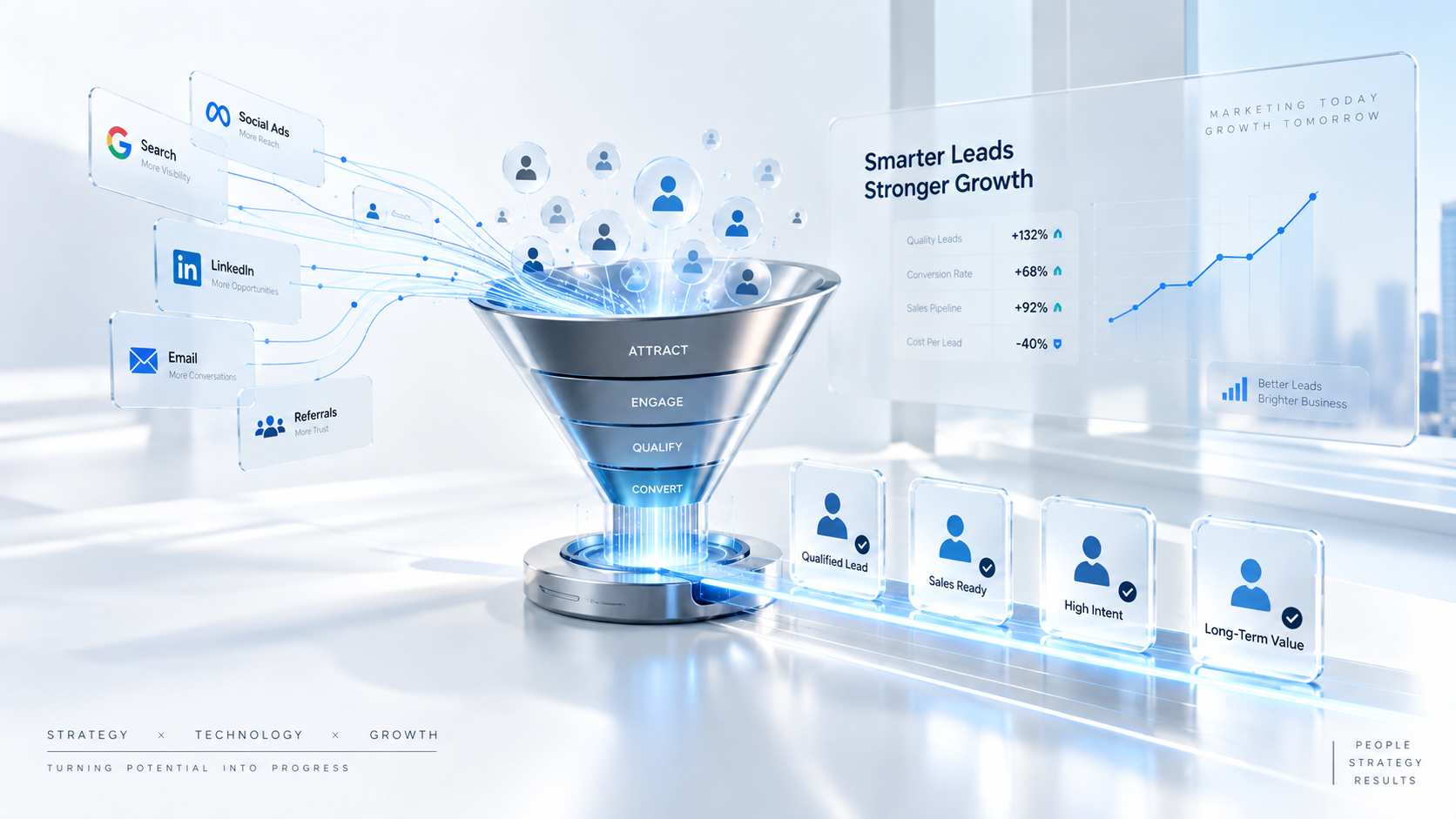
A business can generate hundreds of enquiries in a month and still struggle to close deals if most of those enquiries come from people who are not a good fit. On the other hand, a smaller number of relevant prospects can create significantly more value when they have a genuine need, purchasing intent, and the ability to make a decision. That is why an effective lead generation strategy should focus on attracting qualified prospects rather than simply collecting more contact details.
The priority should be understanding how well the business knows its ideal customer.
The same principle applies to SEO. Ranking for a high-volume keyword may bring plenty of visitors, but traffic alone does not create revenue. A stronger SEO lead generation strategy focuses on search intent. Someone researching a general topic is not at the same stage as someone comparing providers, looking for pricing, or searching for a specific service. Your content should recognise that difference and guide high-intent prospects toward the next step.
This is also where your website and landing pages become important. If someone arrives with a clear requirement, they should immediately understand what you offer, why it matters to them, and what to do next. Good
Conversion optimisation is not about making a page look impressive. It is about removing uncertainty and making the decision to enquire feel straightforward.
Of course, not every promising prospect is ready to speak with sales immediately. Lead nurturing gives businesses the opportunity to stay relevant while that prospect continues researching. Useful content, personalised follow-ups, and timely communication can gradually build trust until the prospect is ready to take action. Businesses should also look beyond lead volume when measuring performance marketing. Cost per lead is useful, but cost per qualified lead, lead-to-customer conversion rate, customer acquisition cost, and revenue generated from each channel tell you much more about actual performance.
Ultimately, high-quality lead generation comes down to understanding people and responding to their intent at the right moment. When audience research, SEO, content, conversion optimisation, qualification, and nurturing work together, lead generation becomes much more than a way to fill a sales pipeline. It becomes a structured approach to attracting prospects who are genuinely worth pursuing.
Final Thoughts
The strongest lead generation strategies are not necessarily the ones that generate the most enquiries. They consistently attract prospects who fit the business, understand the value being offered, and have a genuine reason to take the next step. By focusing on intent, relevance, and measurable conversion performance, businesses can build a lead generation funnel that supports sustainable customer acquisition rather than short-term lead volume.
Frequently Asked Questions
A high-quality lead matches your ideal customer profile, needs your product or service, and shows buying intent.
SEO attracts people searching for relevant products or services, helping businesses generate qualified leads through targeted keywords.
No. Qualified leads are more valuable than a high volume of poorly targeted enquiries.
Use audience targeting, SEO, relevant content, optimised landing pages, lead qualification, and lead nurturing.
Track qualified lead rate, cost per qualified lead, conversion rate, customer acquisition cost, and revenue by marketing channel.