Mondern Markeing Mindset for Business Owners
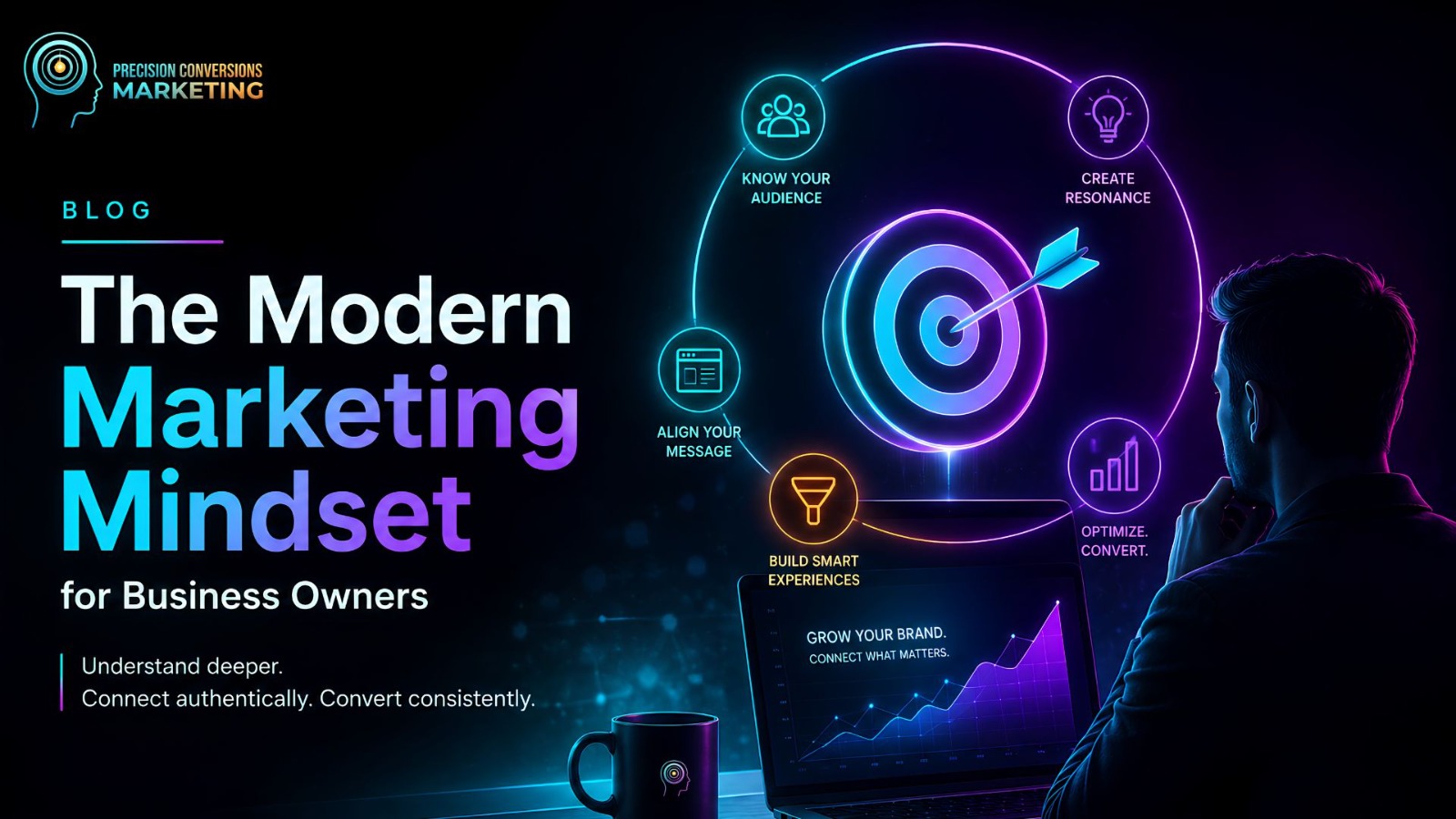
The Modern Marketing Mindset for Business Owners
Marketing has changed more in the last five years than in the previous twenty, and business owners entering today’s landscape often feel the tension between what used to work and what drives results now. The shift isn’t just about platforms or budgets; it’s about understanding how audiences behave, how they engage, and how their expectations have evolved. When a business owner begins exploring marketing, the first step is recognizing that engagement is no longer a single moment. It is a sequence of micro behaviors scrolling, pausing, clicking, reading, comparing, validating, and finally deciding. These behaviors form the foundation of modern audience engagement and understanding them is essential for any brand that wants to grow.
Audience engagement exists as a layered experience. People don’t simply “see an ad” anymore; they experience it. They react to tone, color, pacing, authenticity, and relevance. They compare it to other ads they’ve seen that day. They evaluate whether the message feels aligned with their needs or whether it feels like noise. Engagement is earned through resonance, not repetition. This is why brands that understand their audience’s motivations outperform brands that rely on generic messaging. When a business owner begins to appreciate this layered engagement, they unlock the ability to communicate with precision rather than volume. Concepts like audience behavior, creative resonance, and micro engagement become strategic tools rather than abstract ideas.
One of the most overlooked sources of insight into these behaviors is the post purchase survey. Most businesses treat surveys as optional, but they are one of the most valuable assets in modern marketing. A well designed survey reveals who your customers are, what motivated them, what alternatives they considered, and what problem they were trying to solve. This demographic and psychographic information becomes the backbone of micro targeting. When a business knows that its best customers share specific traits such as age ranges, industries, income levels, interests, frustrations, it can build campaigns that speak directly to those people rather than broadcast generic messages to everyone. This is how specialty products thrive: they stop trying to appeal to the masses and instead communicate directly with the people who are most likely to buy. Concepts like micro targeting and post purchase insights become essential tools for growth.
As audience behavior evolves, ad creatives must evolve with it. The trend in modern creatives is shifting away from polished, corporate style ads and toward authentic, relatable, story driven content. Audiences respond more strongly to ads that feel human, conversational, and emotionally grounded. They want to see real people, real problems, and real solutions. They want to understand why a product exists, not just what it does. This shift is why brands that rely on static “Buy Now” creatives are seeing diminishing returns. The modern audience wants reasons, not commands. They want clarity, not pressure. They want alignment, not urgency. Understanding creative trends allows a business to build ads that feel relevant rather than outdated.
This shift in creative style directly influences how landing pages should be built. A landing page must reflect the creative ad that brought the visitor there. If the ad is conversational, the landing page must be conversational. If the ad is emotional, the landing page must be emotional. If the ad promises clarity, the landing page must deliver clarity. The most effective landing pages today rely on three to five strong “Reasons Why” rather than a blunt “Buy Now” approach. These reasons create narrative momentum. They help the visitor justify their decision. They reduce friction and increase trust. When a landing page mirrors the creative style of the ad, the visitor feels continuity rather than disruption. This continuity is one of the strongest drivers of conversion, and it is why landing page alignment is now considered a core marketing principle.
As campaigns grow more sophisticated, many brands begin incorporating mini funnels within their main funnel. A mini funnel is a focused sequence designed to guide a specific type of visitor through a tailored experience. For example, a visitor who arrives from a testimonial ad may receive a credibility driven mini funnel, while a visitor who arrives from a problem solution ad may receive an educational mini funnel. These mini funnels increase conversion by matching the visitor’s mindset. They also justify investment in multiple landing pages or product pages, because each page serves a distinct strategic purpose. Budgeting for these pages becomes easier when a business understands that each page is not an expense but an asset that increases conversion, reduces wasted ad spend, and improves customer segmentation. Concepts like funnel architecture and mini funnel strategy help business owners understand why this approach works.
When designing these pages, business owners often face a choice between simplicity and flashiness. Simple and clear pages convert because they reduce cognitive load. Flashy pages attract attention but often distract from the message. The pros and cons of each approach depend on the audience, the product, and the creative strategy. Simplicity builds trust. Flashiness builds curiosity. Simplicity increases clarity. Flashiness increases novelty. The key is choosing the approach that aligns with the audience’s expectations and the brand’s identity. Understanding page design philosophy helps business owners make informed decisions rather than aesthetic guesses.
Finally, every business must understand the cost of first impressions. The first impression a visitor has of your brand determines whether they continue exploring or abandon the page. This is why landing page testing is essential. Variations in headlines, imagery, layout, tone, and structure can dramatically influence performance. Testing is not a luxury; it is a necessity. The additional cost of landing page testing is not an expense, it is an investment in clarity, efficiency, and long term performance. Brands that test outperform brands that assume. Brands that iterate outperform brands that stagnate. Concepts like landing page testing and first impression optimization help business owners understand why testing is a critical part of modern marketing.
Marketing today is not about shouting louder; it is about understanding deeper. It is about respecting the audience’s intelligence, motivations, and expectations. It is about building experiences that feel aligned, intentional, and human. When business owners embrace this mindset, they stop chasing trends and start building systems. They stop guessing and start knowing. They stop hoping and start converting. PCM exists to guide them through this evolution one insight, one strategy, and one optimized experience at a time.